01
System design and zoning
Zones that follow how the space is used — open desking, cabins, meeting rooms, server area — so half the floor can be shut down without affecting the rest.
Adayar, Chennai 600020 · Working across Tamil Nadu since 2006
VRF / VRV
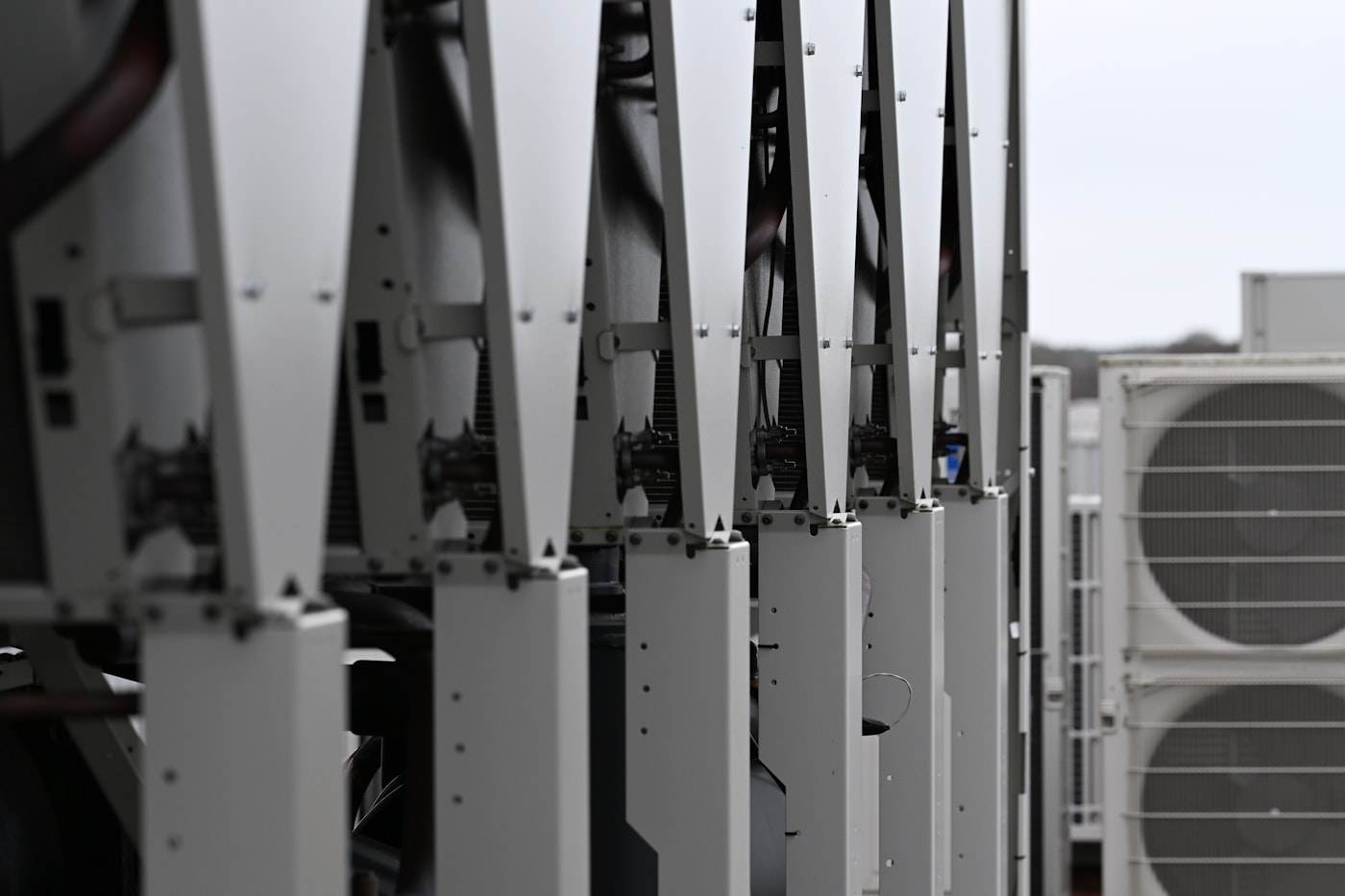
One outdoor unit, many indoor units, every room on its own setting. VRF is what most office floors and hotel wings get built with now — provided the piping and the zoning are thought through first.
The appeal of VRF is obvious: one condenser on the terrace instead of twenty, indoor units matched to each room, and no cooling paid for in a meeting room nobody is in.
What decides whether it works is less obvious. Pipe runs and lift between the outdoor unit and the furthest indoor unit. Refnet placement. Whether the diversity assumed at design actually matches how the floor gets used. Get those wrong and the far end of the system underperforms in a way that no amount of servicing fixes.
We design the pipework properly, pressure test it, pull a real vacuum rather than a token one, and commission zone by zone. On a floor that is being fitted out, we work to the interiors programme so the ceiling is not opened twice.
Where this applies
Office floors and IT parks, hotel guest wings, multi-level showrooms, clinics, and any building where different areas are occupied at different times.
VRF / VRV
Scope
This is what goes into the quote. If something on your job is not on this list, it will be written in rather than assumed.
01
Zones that follow how the space is used — open desking, cabins, meeting rooms, server area — so half the floor can be shut down without affecting the rest.
02
Runs sized for the actual length and lift, joints brazed under nitrogen, and the whole circuit pressure tested and held before anything is closed up.
03
Cassette, hi-wall, ducted or floor-mounted, chosen for the ceiling you have rather than whatever is standard in the catalogue.
04
Centralised or per-room control set up, addresses mapped, and every indoor unit proved against its zone before handover.
Common questions
Usually above about eight to ten indoor units, or where terrace space for condensers is tight. Below that, separate units are often cheaper to buy and simpler to replace one at a time. We will tell you which side of the line you are on.
Yes, and a good part of our VRF work is retrofit. The constraints are the riser route for the piping and whether the terrace can carry and ventilate the outdoor units.
Filter cleaning at the indoor units on a short cycle, and a proper service of the condensers, controls and refrigerant circuit through the year. It is less work than the equivalent number of split units, but skipping it is more expensive.
Yes — the power side for the units, the interconnecting control wiring and the isolators. Anything upstream at the panel we will coordinate with your electrical contractor.
Send us the drawings, the tonnage, or just a photo of the plant room. We will come out, measure up and give you a written quote — no charge for the visit anywhere in Chennai.